Why Markets Are Shrugging Off Sticky Inflation
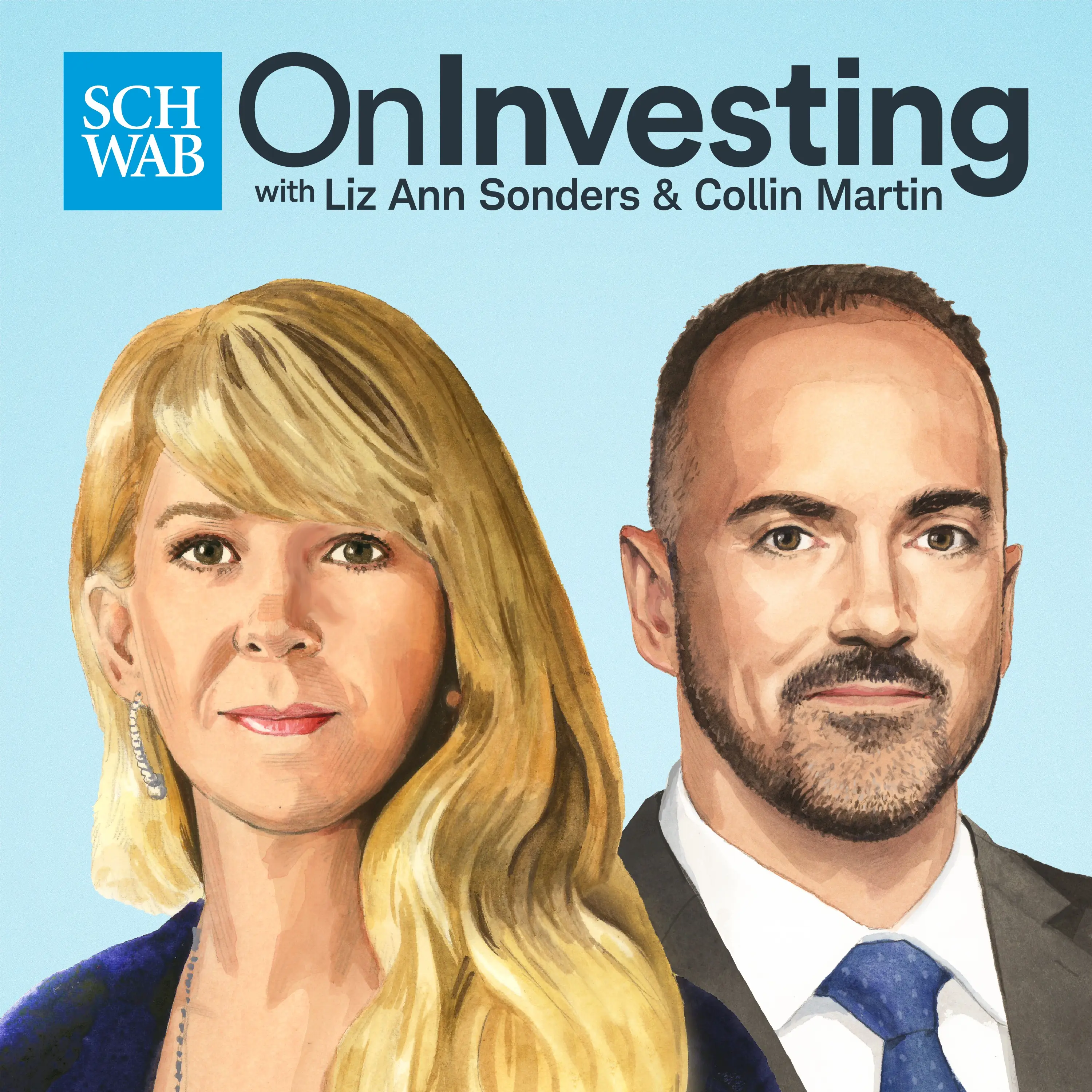
On Investing | EP114
Why Markets Are Shrugging Off Sticky Inflation
Liz Ann Sonders and Collin Martin discuss hotter-than-expected inflation data, with volatile energy prices playing a central role. Because the Fed can't directly influence oil prices, inflation staying above target likely keeps policy on hold, with rate cuts off the table for now and even the possibility of hikes if core inflation or labor strength accelerates.
They also explore how consumers feel inflation differently than economists measure it, contributing to weak sentiment despite still-positive economic growth. Real incomes are slipping, but spending remains supported, helped in part by strong AI-driven business investment.
Then, Liz Ann and Collin cover the growing dominance of AI: It's propping up GDP, earnings expectations, and capital spending, but also introducing concentration risks and shifting corporate financing toward debt. In the bond market, strong demand has kept credit spreads tight, though potential risks include oversupply and uncertain long-term returns on AI investments.
Collin Martin also highlights rising Treasury yields, especially the 10-year, and the role of the "term premium" in a more uncertain, higher-inflation world. This shift is contributing to a negative correlation between stocks and bonds, which is a dynamic more reminiscent of earlier, more volatile inflation regimes.
Finally, Collin and Liz Ann look ahead to next week's upcoming macroeconomic indicators and key data releases.
On Investing is an original podcast from Charles Schwab.
If you enjoy the show, please leave a rating or review on Apple Podcasts.
Check out more episodes.


Explore more topics
This material is intended for general informational and educational purposes only. This should not be considered an individualized recommendation or personalized investment advice. The securities, investment products and investment strategies mentioned are not suitable for everyone. Each investor needs to review an investment strategy for his or her own particular situation before making any investment decisions.
All expressions of opinion are subject to change without notice in reaction to shifting market, economic or political conditions. Data contained herein from third party providers is obtained from what are considered reliable sources. However, its accuracy, completeness or reliability cannot be guaranteed.
Past performance is no guarantee of future results.
Investing involves risk, including loss of principal.
Performance may be affected by risks associated with non-diversification, including investments in specific countries or sectors. Additional risks may also include, but are not limited to, investments in foreign securities, especially emerging markets, real estate investment trusts (REITs), fixed income, municipal securities including state specific municipal securities, small capitalization securities and commodities. Each individual investor should consider these risks carefully before investing in a particular security or strategy.
Fixed income securities are subject to increased loss of principal during periods of rising interest rates. Fixed income investments are subject to various other risks including changes in credit quality, market valuations, liquidity, prepayments, early redemption, corporate events, tax ramifications, and other factors. Lower rated securities are subject to greater credit risk, default risk, and liquidity risk.
Currencies are speculative, very volatile and not suitable for all investors.
All names and market data shown are for illustrative purposes only and are not a recommendation, offer to sell, or a solicitation of an offer to buy any security.
Forecasts contained herein are for illustrative purposes only, may be based upon proprietary research and are developed through analysis of historical public data.
The policy analysis provided by Charles Schwab & Co., Inc., does not constitute and should not be interpreted as an endorsement of any political party.
Indexes are unmanaged, do not incur management fees, costs, and expenses and cannot be invested in directly. For more information on indexes, please see schwab.com/indexdefinitions
Negative correlation refers to investments that tend to move in opposite directions: when one rises, the other falls.