Why Corporate Earnings Matter for Stocks, Bonds & the Fed
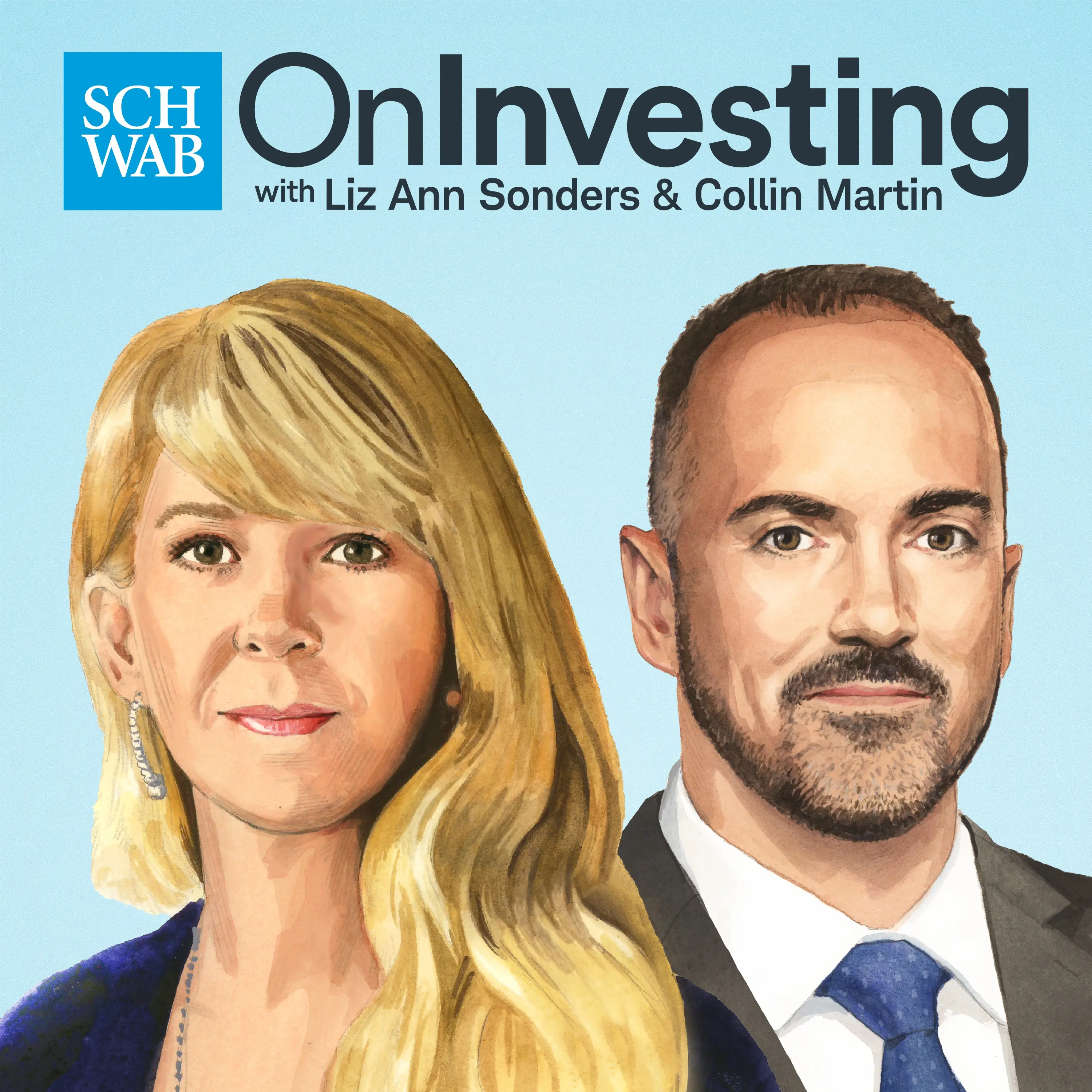
On Investing | EP110
Why Corporate Earnings Matter for Stocks, Bonds & the Fed
Earnings season kicks off with a mixed but generally constructive signal for markets, as Liz Ann Sonders and Collin Martin examine what corporate profits reveal about macroeconomic and market health. While equity investors tend to focus on near‑term earnings growth, Collin emphasizes that bond markets care more about long‑term cash flows and companies' ability to service debt. Aggregate corporate profits remain strong when viewed through broad measures like NIPA profits (National Income and Product Accounts), supporting investment, employment, and overall financial stability, even as borrowing costs drift higher due mainly to rising Treasury yields rather than widening credit spreads.
Beneath that positive backdrop, however, stresses are emerging in lower‑quality areas of the market. Collin highlights ongoing weakness among the riskiest high‑yield borrowers, where interest coverage ratios remain below sustainable levels, raising the risk of defaults if rates stay elevated. Liz Ann connects this theme to equity markets, noting a shift toward profitability and balance‑sheet strength, particularly a reversal in small‑cap performance, where profitable companies are now outperforming non‑profitable "zombie" companies. At the same time, earnings estimates have begun to deteriorate, with negative revisions concentrated in the near term and strength increasingly isolated to a small group of large-cap technology companies.
While markets appear to be betting on a resolution to the Iran conflict, risks remain tied to oil prices, inflation expectations, and consumer health, especially among lower‑income households.
Finally, Collin and Liz Ann discuss which key economic data to watch in the coming weeks.
You can read the article "Gambler's Blues: Betting Isn't Investing" on Schwab.com.
On Investing is an original podcast from Charles Schwab.
If you enjoy the show, please leave a rating or review on Apple Podcasts.
Check out more episodes.


Explore more topics
This material is intended for general informational and educational purposes only. This should not be considered an individualized recommendation or personalized investment advice. The securities, investment products and investment strategies mentioned are not suitable for everyone. Each investor needs to review an investment strategy for his or her own particular situation before making any investment decisions.
All expressions of opinion are subject to change without notice in reaction to shifting market, economic or political conditions. Data contained herein from third party providers is obtained from what are considered reliable sources. However, its accuracy, completeness or reliability cannot be guaranteed.
Past performance is no guarantee of future results.
Investing involves risk, including loss of principal.
Diversification and asset allocation strategies do not ensure a profit and do not protect against losses in declining markets.
Small-cap stocks are subject to greater volatility than those in other asset categories. Small-Cap Company Risk. Small-cap companies may be more vulnerable to adverse business or economic events than larger, more established companies and their securities may be riskier than those issued by larger companies. The value of securities issued by small-cap companies may be based in substantial part on future expectations rather than current achievements and their prices may move sharply, especially during market upturns and downturns. In addition, small-cap companies may have limited financial resources, management experience, product lines and markets, and their securities may trade less frequently and in more limited volumes than the securities of larger companies. Further, small-cap companies may have less publicly available information and such information may be inaccurate or incomplete.
Performance may be affected by risks associated with non-diversification, including investments in specific countries or sectors. Additional risks may also include, but are not limited to, investments in foreign securities, especially emerging markets, real estate investment trusts (REITs), fixed income, municipal securities including state specific municipal securities, small capitalization securities and commodities. Each individual investor should consider these risks carefully before investing in a particular security or strategy.
Fixed income securities are subject to increased loss of principal during periods of rising interest rates. Fixed income investments are subject to various other risks including changes in credit quality, market valuations, liquidity, prepayments, early redemption, corporate events, tax ramifications, and other factors. Lower rated securities are subject to greater credit risk, default risk, and liquidity risk.
High-yield securities and unrated securities of similar credit quality (junk bonds) are subject to greater levels of credit and liquidity risks and may be more volatile than higher-rated securities. High-yield securities are considered predominately speculative with respect to the issuer's continuing ability to make principal and interest payments.
All names and market data shown are for illustrative purposes only and are not a recommendation, offer to sell, or a solicitation of an offer to buy any security.
Commodity-related products carry a high level of risk and are not suitable for all investors. Commodity-related products may be extremely volatile, may be illiquid, and can be significantly affected by underlying commodity prices, world events, import controls, worldwide competition, government regulations, and economic conditions.
International investments involve additional risks, which include differences in financial accounting standards, currency fluctuations, geopolitical risk, foreign taxes and regulations, and the potential for illiquid markets. Investing in emerging markets may accentuate this risk.
Forecasts contained herein are for illustrative purposes only, may be based upon proprietary research and are developed through analysis of historical public data.
Schwab does not recommend the use of technical analysis as a sole means of investment research.
The policy analysis provided by Charles Schwab & Co., Inc., does not constitute and should not be interpreted as an endorsement of any political party.
Indexes are unmanaged, do not incur management fees, costs, and expenses and cannot be invested in directly. For more information on indexes, please see schwab.com/indexdefinitions