How Macro Forces Shape Credit Markets (With Winnie Cisar)
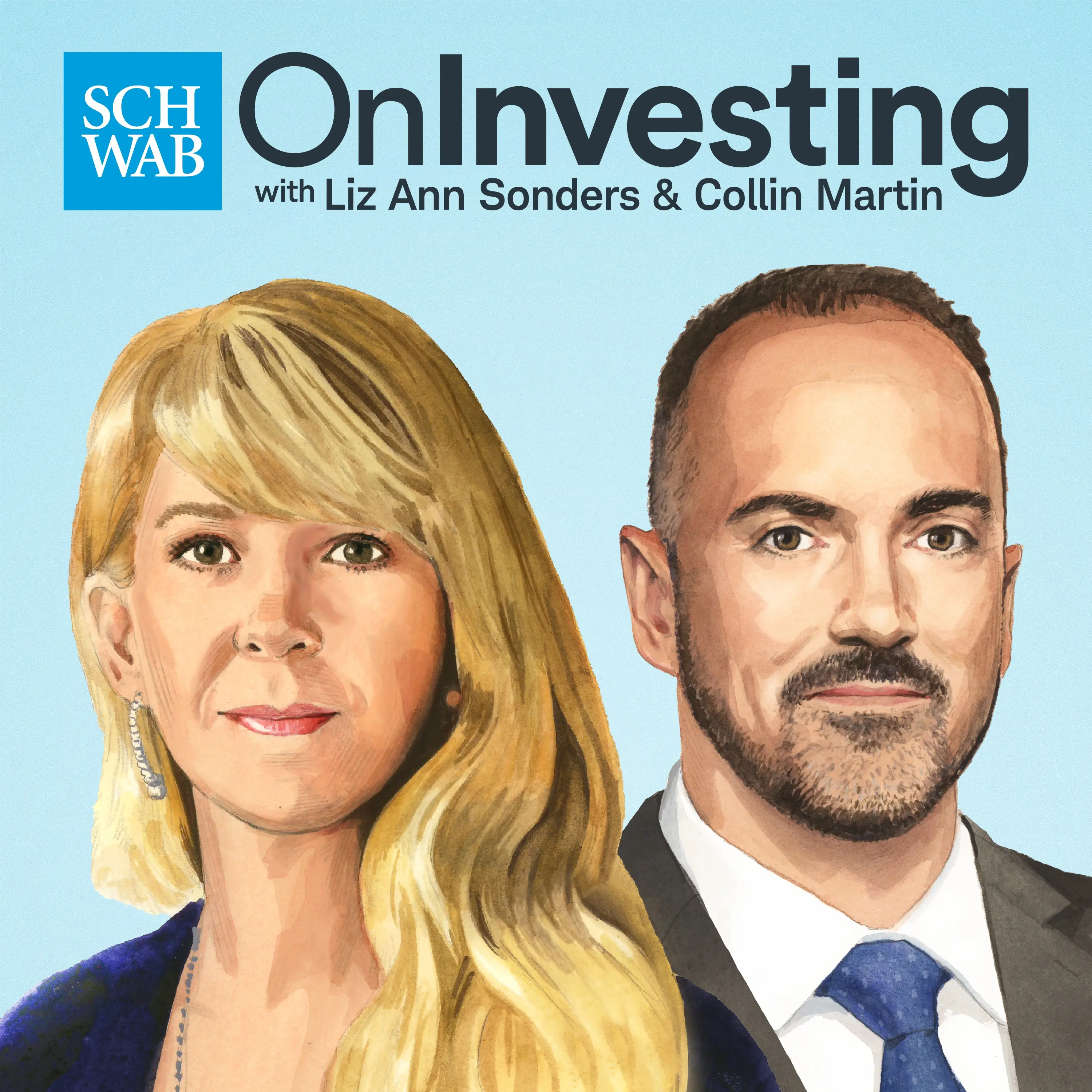
On Investing | EP112
How Macro Forces Shape Credit Markets (With Winnie Cisar)
The Federal Reserve faces a pivotal moment: the transition from Jerome Powell as Fed chair to Kevin Warsh, with Powell opting to remain at the Fed as a governor. Collin Martin and Liz Ann Sonders discuss what Warsh's confirmation signals for future Fed policy, noting his interest in reshaping how the Fed communicates with markets—potentially scaling back press conferences, reducing the emphasis on dot plots and projections, and encouraging less frequent public commentary from Fed officials.
Then, Collin Martin is joined by Winnie Cisar, global head of strategy at CreditSights. She provides an in‑depth look at the current state of corporate credit markets. Winnie explains how her team blends macroeconomic signals, such as inflation trends, labor market data, and central bank policy, with bottom‑up company analysis to form credit views. Cisar highlights how the structure of credit markets has evolved since the financial crisis, with risk increasingly spread across high-yield bonds, leveraged loans, and private credit. These shifts, along with increased debt issuance from banks, technology firms, and utilities, have contributed to an overall improvement in index‑level credit quality, even as risks have migrated to less transparent parts of the market.
Finally, Collin and Liz Ann look ahead to next week's upcoming economic indicators and data releases.
On May 1, in honor of National Investing Day, the Schwab coaching team will be hosting a special day of educational events. You can learn more about those at schwab.com/coaching.
On Investing is an original podcast from Charles Schwab.
If you enjoy the show, please leave a rating or review on Apple Podcasts.
Check out more episodes.


Explore more topics
This material is intended for general informational and educational purposes only. This should not be considered an individualized recommendation or personalized investment advice. The securities, investment products and investment strategies mentioned are not suitable for everyone. Each investor needs to review an investment strategy for his or her own particular situation before making any investment decisions.
All expressions of opinion are subject to change without notice in reaction to shifting market, economic or political conditions. Data contained herein from third party providers is obtained from what are considered reliable sources. However, its accuracy, completeness or reliability cannot be guaranteed.
The comments, views, and opinions expressed in the presentation are those of the speakers and do not necessarily represent the views of Charles Schwab.
Past performance is no guarantee of future results.
Investing involves risk, including loss of principal.
Diversification and asset allocation strategies do not ensure a profit and do not protect against losses in declining markets.
Performance may be affected by risks associated with non-diversification, including investments in specific countries or sectors. Additional risks may also include, but are not limited to, investments in foreign securities, especially emerging markets, real estate investment trusts (REITs), fixed income, municipal securities including state specific municipal securities, small capitalization securities and commodities. Each individual investor should consider these risks carefully before investing in a particular security or strategy.
Fixed income securities are subject to increased loss of principal during periods of rising interest rates. Fixed income investments are subject to various other risks including changes in credit quality, market valuations, liquidity, prepayments, early redemption, corporate events, tax ramifications, and other factors. Lower rated securities are subject to greater credit risk, default risk, and liquidity risk.
The Schwab Center for Financial Research is a division of Charles Schwab & Co., Inc.
All names and market data shown are for illustrative purposes only and are not a recommendation, offer to sell, or a solicitation of an offer to buy any security.
Forecasts contained herein are for illustrative purposes only, may be based upon proprietary research and are developed through analysis of historical public data.
The policy analysis provided by Charles Schwab & Co., Inc., does not constitute and should not be interpreted as an endorsement of any political party.
Indexes are unmanaged, do not incur management fees, costs, and expenses and cannot be invested in directly. For more information on indexes, please see schwab.com/indexdefinitions